Cyber Crime Lawyer in Washim
Wednesday, September 1, 2021
Cyber Lawyer in Yavatmal
Cyber Lawyer in Wardha
Cyber Lawyer in Thane
Cyber Lawyer in Solapur
Cyber Lawyer in Sindhudurg
Cyber Lawyer in Satara
Cyber Lawyer in Sangli
Cyber Lawyer in Ratnagiri
Cyber Lawyer in Raigad
Cyber Lawyer in Pune
Cyber Lawyer in Parbhani
Cyber Lawyer in Palghar
Cyber Lawyer in Osmanabad
Cyber Lawyer in Nashik
Cyber Lawyer in Nandurbar
Cyber Lawyer in Nanded
Cyber Lawyer in Nagpur
Cyber Lawyer in Navi Mumbai
Cyber Lawyer in Mumbai
Cyber Lawyer in Latur
Cyber Lawyer in Kolhapur
Cyber Lawyer in Jalna
Cyber Lawyer in Jalgaon
Cyber Lawyer in Hingoli
Cyber Lawyer in Gondia
Cyber Lawyer in Gadchiroli
Cyber Lawyer in Dhule
Cyber Lawyer in Chandrapur
Cyber Lawyer in Buldhana
Cyber Lawyer in Bhandara
Cyber Lawyer in Beed
Cyber Lawyer in Aurangabad
Cyber Lawyer in Amravati
Cyber Lawyer in Akola
Cyber Lawyer in Ahmednagar
Monday, August 30, 2021
It is an excellent online service introduced by Government of India. Kindly, pass this on to as many as you can. Finally something very useful...*
INDIAN GOVERNMENT INTRODUCED ONLINE Services
Obtain:
1. Birth Certificate http://www.india.gov.in/howdo/howdoi.php?service=1
.
2. Caste Certificate http://www.india.gov.in/howdo/howdoi.php?service=4
.
3. Tribe Certificate http://www.india.gov.in/howdo/otherservice_details.php?service=8
.
4. Domicile Certificate http://www.india.gov.in/howdo/howdoi.php?service=5
.
5. Driving Licence http://www.india.gov.in/howdo/howdoi.php?service=6
.
6. Marriage Certificate http://www.india.gov.in/howdo/howdoi.php?service=3
.
7. Death Certificate http:// www.india.gov.in/howdo/howdoi.php?service=2
.
Apply for:
1. PAN Card http://www.india.gov.in/howdo/otherservice_details.php?service=15
.
2. TAN Card http://www.india.gov.in/howdo/otherservice_details.php?service=3
.
3. Ration Card http://www.india.gov.in/howdo/howdoi.php?service=7
.
4. Passport http://www.india.gov.in/howdo/otherservice_details.php?service=2
.
5. Inclusion of name in the Electoral Rolls http://www.india.gov.in/howdo/howdoi.php?service=10
.
Register:
1. Land/Property http://www.india.gov.in/howdo/howdoi.php?service=9
.
2. Vehicle http://www.india.gov.in/howdo/howdoi.php?service=13
.
3. With State Employment Exchange http://www.india.gov.in/howdo/howdoi.php?service=12
.
4. As Employer http://www.india.gov.in/howdo/otherservice_details.php?service=17
.
5. Company http://www.india.gov.in/howdo/otherservice_details.php?service=19
.
6. .IN Domain http://www.india.gov.in/howdo/otherservice_details.php?service=18
.
7. GOV.IN
Domain http://www.india.gov.in/howdo/otherservice_details.php?service=25
.
Check/Track:
1. Waiting list status for Central Government Housing http://www.india.gov.in/howdo/otherservice_details.php?service=9
.
2. Status of Stolen Vehicles http://www.india.gov.in/howdo/otherservice_details.php?service=1
.
3. Land Records http://www.india.gov.in/landrecords/index.php
.
4. Cause list of Indian Courts http://www.india.gov.in/howdo/otherservice_details.php?service=7
.
5. Court Judgments (JUDIS ) http://www.india.gov.in/howdo/otherservice_details.php?service=24
.
6. Daily Court Orders/Case Status http://www.india.gov.in/howdo/otherservice_details.php?service=21
.
7. Acts of Indian Parliament http://www.india.gov.in/howdo/otherservice_details.php?service=13
.
8. Exam Results http://www.india.gov.in/howdo/otherservice_details.php?service=16
.
9. Speed Post Status http://www.india.gov.in/howdo/otherservice_details.php?service=10
.
10. Agricultural Market Prices Online http://www.india.gov.in/howdo/otherservice_details.php?service=6
.
Book/File/Lodge:
1. Train Tickets Online http://www.india.gov.in/howdo/otherservice_details.php?service=5
.
2. Air Tickets Online http://www.india.gov.in/howdo/otherservice_details.php?service=4
.
3. Income Tax Returns http://www.india.gov.in/howdo/otherservice_details.php?service=12
.
4. Complaint with Central Vigilance Commission (CVC) http://www.india.gov.in/howdo/otherservice_details.php?service=14
.
Contribute to:
1. Prime Minister's Relief Fund http://www.india.gov.in/howdo/otherservice_details.php?service=11
.
Others:
1. Send Letters Electronically http://www.india.gov.in/howdo/otherservice_details.php?service=20
.
Global Navigation
1. Citizens http://www.india.gov.in/citizen.php
.
2. Business (External website that opens in a new window) http://business.gov.in/
.
3. Overseas http://www.india.gov.in/overseas.php
.
4. Government http://www.india.gov.in/govtphp
.
5. Know India http://www.india.gov.in/knowindia.php
.
6. Sectors http://www.india.gov.in/sector.php
.
7. Directories http://www.india.gov.in/directories.php
.
8. Documents http://www.india.gov.in/documents.php
.
9. Forms http://www.india.gov.in/forms/forms.php
.
10. Acts http://www.india.gov.in/govt/acts.php
.
11. Rules http://www.india.gov.in/govt/rules.php
.
12. Schemes http://www.india.gov.in/govt/schemes.php
.
13. Tenders http://www.india.gov.in/tenders.php
.
14. Home http://www.india.gov.in/default.php
.
15. About the Portal http://www.india.gov.in/abouttheportal.php
.
16. Site Map http://www.india.gov.in/sitemap.php
.
17. Link to Us http://www.india.gov.in/linktous.php
.
18. Suggest to a Friend http://www.india.gov.in/suggest/suggest.php
.
19. Help http://www.india.gov.in/help.php
.
20. Terms of Use http://www.india.gov.in/termscondtions.php
.
21. Feedback http://www.india.gov.in/feedback.php
.
22. Contact Us http://www.india.gov.in/contactus.php
.
WILL TURN OUT TO BE VERY USEFUL. 👍🇮🇳💐
Thursday, August 5, 2021
cyber crime complaint online
Thursday, July 29, 2021











Saturday, July 17, 2021

We deals into all types of Legal issues like

Cyber crime,
Cyber security,
Civil cases
Family issues
Court marriage
GS Legal consultancy, Pune
Office No. 202, Vision 9 mall, Pimple Saudagar, Pune

We deal with Arbitration matters pertaining to Cyber Laws, Cyber Security and Data Protection Laws

In a cybercrime, a computer can either be used as tool or a target. A computer can be a source of evidence (see digital forensics)
GS Legal consultancy
Our office is located at Belapur in Navi Mumbai

Hinewadi, Kharadi, Magarpatta

We deal with Arbitration matters pertaining to Cyber Laws, Cyber Security and Data Protection Laws
In a cybercrime, a computer can either be used as tool or a target. A computer can be a source of evidence (see digital forensics)
GS Legal consultancy
office No. 202, Vision 9 mall, Pimple Saudagar, Pune


Tuesday, July 6, 2021

The Citizen financial cyber fraud reporting & management system has been developed in-house to integrate law enforcement agencies and banks and financial intermediaries.
According to the center, the helpline 155260 has been able to save more than Rs 1.85 crore of defrauded money from reaching the hands of fraudsters.




E-Commerce and Intellectual Property disputes in cyber space
Technology Laws in India
Cyber Law Consulting
10 ways to secure smartphone from hacking

1. Use screen security PIN/password
2. Lock apps on your device
3. Download an Antivirus app
4. Wifi hotspot password must be strong
5. Download apps from trusted sources
6. Read app permissions before downloading an app
7. Never give your smarphone to anyone blindly
8. Keep observation while child using smartphones
9. Update your OS and Apps regularly
10. Do factory reset if have any doubts
Monday, June 14, 2021


We at GS associates help people to get copyright of their valuable content and help them to avoid misuse with their intellectual property.
for more information please call


we at GS Associates, Pune use to help people to copyright and trademark registration for their businesses.
For more information please call


Wednesday, April 14, 2021
केंद्रीय गृहमंत्रालय आणि दिल्ली पोलिसांच्या सायबर सेलनं 155260 ही हेल्पलाइन सुरू केली आहे. जर तुम्ही कोणत्याही प्रकारच्या ऑनलाइन फ्रॉडला बळी पडलेले असाल तर तातडीनं या क्रमांकावर संपर्क साधा. पुढच्या ७ ते ८ मिनिटांमध्ये तुमच्या बँक खात्यातून ज्या आयडीवरुन पैसे चोरले गेले आहेत. त्या बँकेच्या किंवा ई-साइटला अलर्ट मेसेज हेल्पलाइन क्रमांकावरुन जाईल. त्यामुळे बँक खात्यातून वजा होणारी रक्कम होल्डवर जाईल आणि तुमचे पैसे वाचू शकतात.
ऑनलाइन फ्रॉडच्या घटनांना रोखण्यासाठी गृह मंत्रालयाच्या सायबर पोर्टल https://cybercrime.gov.in/ आणि दिल्ली पोलिसांच्या सायबर सेलसोबत 155260 हा पायलट प्रोजेक्ट गेल्या वर्षी नोव्हेंबर महिन्यात सुरू करण्यात आला होता. पण आता संपूर्णपणे याची तयारी करुन लॉन्च करण्यात आला आहे. इंडियन सायबर क्राइम कोऑर्डिनेशनचं हे असं व्यासपीठ आहे की दिल्ली हे राज्य याचं सर्वप्रथम यूझर बनले आहे. यासोबतच राजस्थानला देखील जोडण्यात आलं आहे. यानंतर हळूहळू सर्व राज्या या प्रोजेक्टशी जोडले जाणार आहेत.
जवळपास ५५ बँका, ई-वॉलेट्स, ई-कॉमर्स साइट्स, पेमेंट गेटवे व इतर संस्थांसोबत मिळून इंटरकनेक्ट प्लॅटफॉर्म तयार करण्यात आला आहे. ज्याचं नाव 'सिटिजन फायनान्शियल सायबर फ्रॉड रिपोर्टिंग सिस्टम' असं ठेवण्यात आलं आहे. या प्लॅटफॉर्मच्या मदतीनं कमीत कमी वेळेत फ्रॉडला बळी पडलेल्या लोकांची मदत करता येते. या हेल्पलाइनच्या सहाय्यानं आतापर्यंत २१ लोखांच्या ३ लाख १३ हजार रुपये ऑनलाइन फ्रॉड होण्यापासून वाचविण्यात यश आलं आहे.
विशेष म्हणजे, हेल्पलाइनच्या एकूण १० वेगवेगळ्या लाइन्स तयार करण्यात आल्या आहेत. जेणेकरुन हेल्पलाइन कधीची व्यस्त राहणार नाही. हेल्पलाइन नंबर 155260 वर कॉल करताच तुम्हाला तुमचं नाव, नंबर आणि घटना घडल्याची वेळ विचारण्यात येते. प्राथमिक माहिती दिल्यानंतर संबंधित पोर्टल आणि बँक, ई-कॉमर्सच्या डॅशबोर्डला घडलेल्या घटनेची तातडीनं माहिती पोहोचविण्यात येते. यासोबतच फ्रॉडला बळी पडलेल्या व्यक्तीच्या संबंधित बँकेसोबतही घटनेची माहिती दिली जाते. ऑनलाइन फ्रॉड झाल्यापासूनचे पुढचे २ ते ३ तास अतिशय महत्वाचे ठरतात. फ्रॉड झाल्या क्षणाला तुम्हाला तातडीनं तक्रार करणं गरजेचं ठरतं. तुम्ही https://cybercrime.gov.in/ या संकेतस्थळावरही तक्रार दाखल करू शकता. #cybercrime #cybersafety #cybersecurity
Tuesday, March 23, 2021

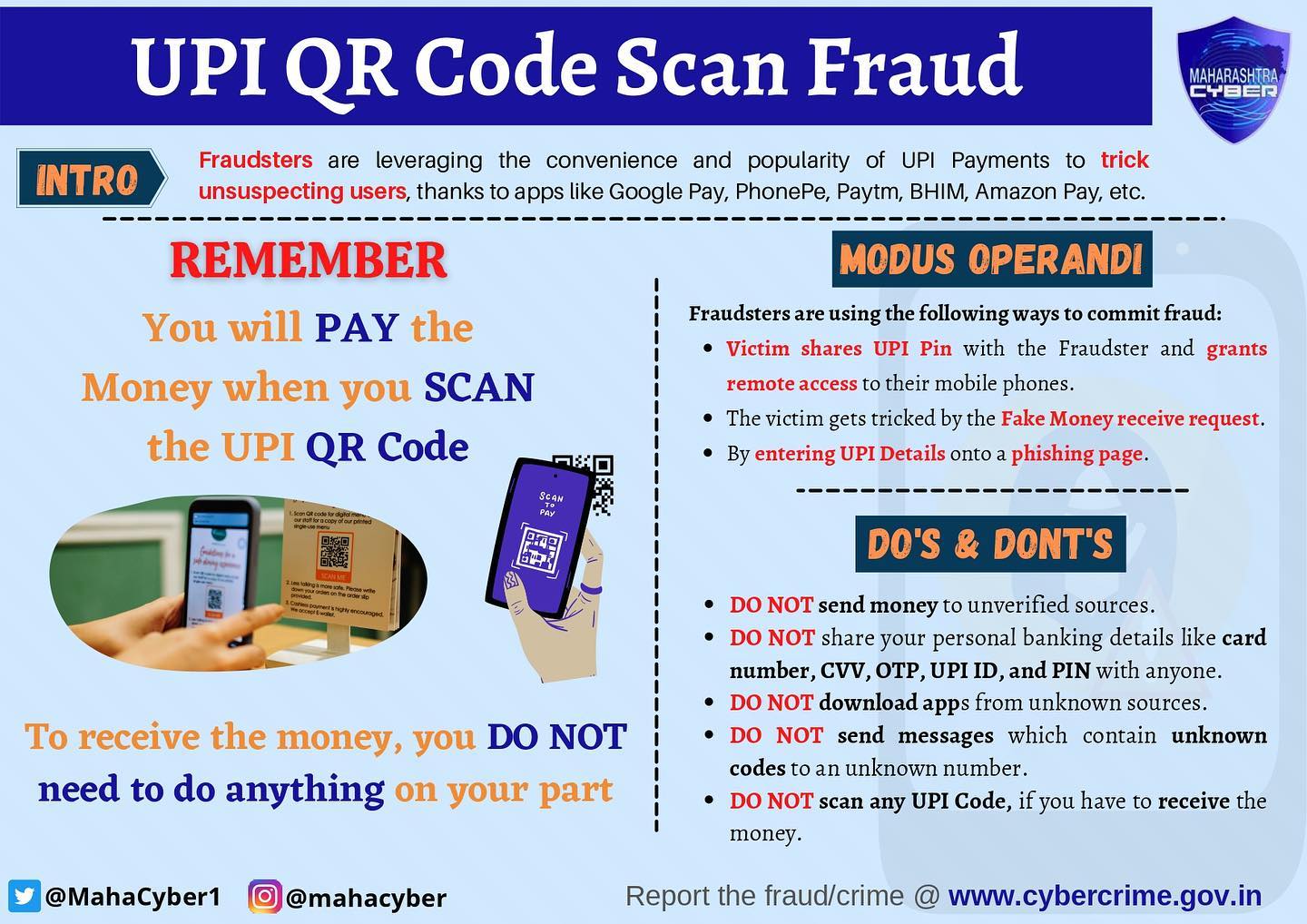
- Your UPI PIN is only needed to send money and check balance. Receiving payments needs no PIN.
- In case someone asks you to enter your PIN, it means you are approving an outward payment, i.e. a payment from your bank account.
- Never make a financial transaction — be it a recharge, bill payment, or anything else while distracted.
- Never do it under pressure with someone on the phone line.
- Never share sensitive personal details on social networking sites.
- Never transfer funds without confirming a person’s identity.

Some helpful tips to make your Google Pay payments safe:
 | Keep your UPI PIN secret: Your UPI PIN is just like your ATM PIN. Never share it with anyone. |
 | Only download trusted apps, Harmful apps can access personal information including your payment details you type on your screen. |
 | Be cautious of sharing your UPI PIN on websites or forms sent to you via a link. |
 | You don't need to enter your UPI PIN to receive money: Entering your UPI PIN means you are paying someone. Pay attention to which direction your money is moving. |
 | Only use your payment app to reach customer care: Find genuine support details in the Help/Support section of your Google Pay app. Avoid untrusted numbers which may be listed on the Internet. |
What to do if you are a victim of a fraud transaction?
Instantly report any irregularities in your transactions to your bank and the government’s Cyber Cell. We recommend you to do the following if you suspect fraud on your Google Pay transaction:
- Report transaction to you bank
- We suggest you reach out to the cyber crime police department in your local jurisdiction.
- Please use this form to report it to us. We will evaluate your request against our policies and take action accordingly.
Wednesday, February 24, 2021

Tuesday, February 16, 2021
Cyber Risk Management & Cyber Frauds
Copyright Registration
Email Hacking
Computer Forensics
facebook abuse
Domain Name Dispute
Data & Source Code Theft
Data Privacy Law


Information Technology has transformed the way people communicate, work, study, shop and conduct financial transactions. However, the increasing use of computers, smartphones, internet services, social media platforms and digital payment applications has also created new opportunities for cybercriminals.
Cybercrimes such as online financial fraud, identity theft, phishing, hacking, cyberstalking, data theft, social media harassment and ransomware attacks are becoming important legal and cybersecurity concerns.
Understanding Cyber Crimes and Cyber Law for IT Users is essential for every internet user, student, employee, business owner, IT professional and organisation.
In India, the Information Technology Act, 2000, Bharatiya Nyaya Sanhita, 2023 and Bharatiya Sakshya Adhiniyam, 2023 provide important legal frameworks for addressing cyber offences, criminal liability and electronic evidence.
This article explains common cybercrimes, important legal provisions, the rights and responsibilities of IT users, complaint procedures and preventive cybersecurity measures.
1. What Are Cyber Crimes?
Cybercrimes are unlawful activities involving computers, computer networks, communication devices, digital platforms or electronic information.
A computer or digital device may be:
The target of a cybercrime.
The instrument used to commit an offence.
A source of digital evidence.
A platform used to facilitate illegal activities.
Cybercrimes may be committed against individuals, companies, financial institutions, government departments and critical infrastructure.
2. Common Types of Cyber Crimes Affecting IT Users
A. Hacking and Unauthorised Access
Hacking involves gaining unauthorised access to computer systems, websites, servers, email accounts or digital devices.
Examples:
Accessing someone else's email without permission.
Breaking into a company's database.
Stealing confidential business information.
Modifying website content without authorisation.
B. Phishing and Online Fraud
Phishing involves fraudulent emails, messages, websites or links designed to trick users into revealing confidential information.
Cybercriminals may attempt to steal:
Banking passwords.
UPI PINs.
OTPs.
Credit and debit card details.
Email login credentials.
C. Identity Theft
Identity theft occurs when someone fraudulently uses another person's identity-related information.
Examples include misuse of passwords, electronic signatures, login credentials and other identification information.
D. Cyberstalking and Online Harassment
Cyberstalking involves using digital communication platforms to repeatedly monitor, harass, threaten or intimidate another person.
Examples include:
Repeated threatening messages.
Unwanted online surveillance.
Creating fake profiles.
Sharing private information without consent.
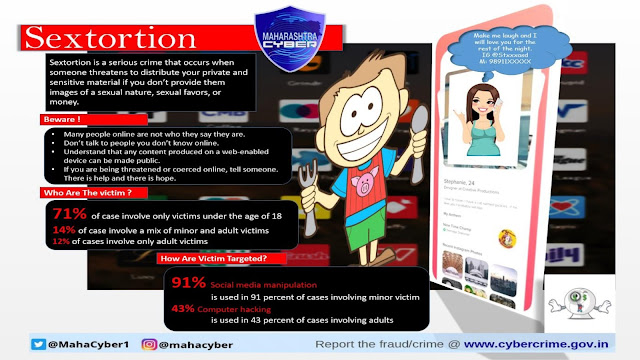
Sending sexually explicit or threatening communications.
E. Ransomware Attacks
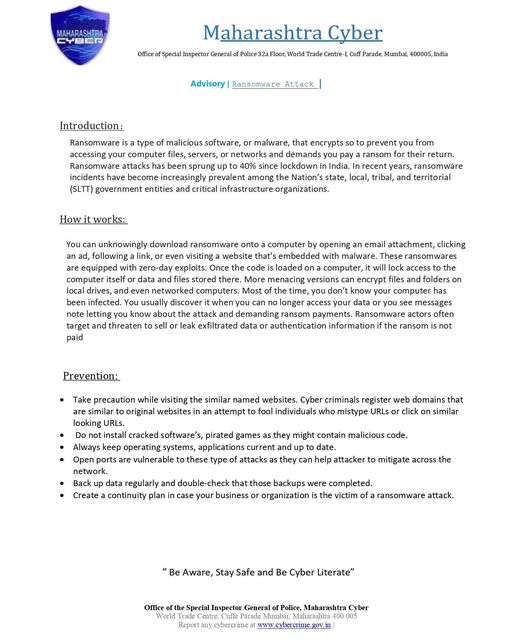
Ransomware is malicious software that encrypts or otherwise prevents access to digital information and demands payment for restoration or release.
Such attacks may affect individuals, hospitals, educational institutions, companies and government organisations.
F. Data Theft and Privacy Violations
Unauthorised collection, copying, disclosure or misuse of personal and confidential information can create serious legal consequences.
G. Social Media Crimes
Social media-related offences may include impersonation, online threats, financial scams, unlawful disclosure of private information, and publication or transmission of prohibited content.
H. Cyber Defamation
False or harmful statements published online may give rise to civil or criminal legal consequences depending on the facts, applicable law and available defences.
I. Online Gaming and Investment Fraud
Fraudsters may use fake investment applications, fraudulent trading platforms, online gaming schemes and cryptocurrency-related scams to deceive users and obtain money.
3. Important Cyber Laws Applicable to IT Users in India
India has enacted several laws that address cyber offences, electronic records, data protection and criminal liability.
A. Information Technology Act, 2000
The Information Technology Act, 2000 is the principal legislation addressing several cyber-related offences in India.
Important sections include:
Section | Legal provision |
|---|---|
Section 43 | Unauthorised access and specified damage to computer resources |
Section 65 | Tampering with computer source documents |
Section 66 | Computer-related offences committed dishonestly or fraudulently |
Section 66B | Dishonestly receiving stolen computer resources or communication devices |
Section 66C | Identity theft |
Section 66D | Cheating by personation using computer resources |
Section 66E | Violation of privacy |
Section 66F | Cyber terrorism |
Section 67 | Publishing or transmitting obscene material in electronic form |
Section 67A | Publishing or transmitting sexually explicit material |
Section 67B | Material depicting children in sexually explicit acts, etc. |
Section 69 | Interception, monitoring or decryption under specified conditions |
Section 69A | Blocking public access to information |
Section 70 | Protected systems |
Section 70B | CERT-In and cybersecurity incident response |
The applicability and punishment under each section depend on the specific statutory ingredients and facts of the case.
B. Bharatiya Nyaya Sanhita, 2023 (BNS)
The Bharatiya Nyaya Sanhita, 2023 replaced the Indian Penal Code with effect from 1 July 2024.
Certain general criminal offences may also apply to cyber-enabled conduct, including:
Cheating and fraud.
Criminal intimidation.
Forgery and forged electronic records.
Criminal conspiracy.
Defamation.
Stalking and harassment.
The relevant provisions must be identified according to the nature of the offence.
C. Bharatiya Sakshya Adhiniyam, 2023 (BSA)
The Bharatiya Sakshya Adhiniyam, 2023 governs the admissibility and proof of evidence in judicial proceedings.
Section 63 is particularly important for electronic and digital records.
Examples of electronic evidence include:
WhatsApp messages.
Emails.
CCTV recordings.
Computer files.
Server logs.
Digital photographs.
Audio and video recordings.
Social media communications.
D. Digital Personal Data Protection Act, 2023
The Digital Personal Data Protection Act, 2023 establishes a legal framework for processing digital personal data in India.
It addresses matters such as:
Personal data processing.
Consent and permitted uses.
Obligations of Data Fiduciaries.
Rights of Data Principals.
Personal data breach obligations.
Penalties for specified contraventions.
Its application must be considered alongside the Act's commencement notifications, applicable rules and exemptions.
E. Consumer Protection Act, 2019
The Consumer Protection Act, 2019 may apply to online purchases, e-commerce transactions, misleading advertisements, unfair trade practices and deficiencies in services.
IT users may have consumer remedies where the legal requirements are satisfied.
4. Rights and Responsibilities of IT Users
Every IT user should understand their legal rights and responsibilities while using digital platforms.
Rights of IT Users
Users have important legal protections, subject to applicable laws:
Right to Privacy: Protection against unlawful interference with personal privacy.
Right to Data Protection: Rights under the DPDP Act as and when the relevant provisions become applicable.
Right to Report Cybercrime: Users can report cyber offences to appropriate authorities.
Right to Legal Remedies: Victims may pursue appropriate criminal, civil or consumer remedies.
Right to Digital Security: Users can expect covered service providers and organisations to comply with applicable legal and security obligations.
Right to Seek Compensation: Remedies may be available under applicable legislation, including Section 43 of the IT Act in appropriate cases.
Responsibilities of IT Users
Every internet user should:
Never access another person's computer or account without authorisation.
Avoid sharing passwords and OTPs.
Respect copyright and intellectual property rights.
Avoid publishing defamatory or unlawful content.
Respect other people's privacy.
Avoid downloading pirated software.
Use licensed software and secure applications.
Report suspicious digital activities.
Follow applicable organisational cybersecurity policies.
5. Cybercrime Reporting Procedure in India
If you become a victim of cybercrime, prompt reporting can help authorities investigate the incident and potentially prevent further financial loss.
Step 1: Report financial cyber fraud immediately
For online financial fraud, call the National Cyber Crime Helpline 1930 as soon as possible.
Step 2: Register an online complaint
Visit the official National Cyber Crime Reporting Portal:
National Cyber Crime Reporting Portal – cybercrime.gov.in
You can report financial fraud, social media offences, identity theft and other cybercrime incidents through the appropriate complaint categories.
Step 3: Contact your bank
Inform your bank immediately.
Request blocking of compromised cards or accounts.
Report unauthorised UPI transactions.
Obtain a complaint or acknowledgement number.
Step 4: Preserve digital evidence
Collect and preserve:
Transaction IDs.
Bank statements.
Screenshots of fraudulent messages.
Phone numbers and email addresses.
Website URLs.
Email headers.
Relevant chat records.
Do not delete original messages or alter digital evidence.
Step 5: Approach the police or cybercrime police station
Depending on the circumstances, provide a written complaint to the appropriate police authority and retain the acknowledgement or complaint reference.
6. Importance of Digital Evidence in Cybercrime Cases
Digital evidence is essential for identifying offenders, establishing the sequence of events and supporting criminal or civil proceedings.
Examples include:
Digital evidence | Legal significance |
|---|---|
WhatsApp chats | Communication records |
Email records | Identity and communication trail |
IP logs | Technical investigation |
CCTV footage | Identification and event reconstruction |
Bank statements | Financial transactions |
Server logs | Unauthorised access investigation |
Mobile forensic reports | Device-related evidence |
Screenshots | Supporting documentary material |
Under the Bharatiya Sakshya Adhiniyam, 2023, Sections 61–63 address electronic and digital records and their proof. Section 63 prescribes conditions and certification requirements for specified computer outputs.
IndiaCode+2
7. Cybersecurity Rules Every IT User Should Follow
Cybersecurity is not only the responsibility of IT departments. Individual users also play an important role in preventing cybercrime.
Recommended security practices
Enable two-factor or multi-factor authentication.
Use strong and unique passwords.
Never share OTPs, UPI PINs or banking passwords.
Avoid clicking suspicious links.
Keep operating systems and applications updated.
Use antivirus and endpoint security tools.
Avoid financial transactions on unsecured public Wi-Fi.
Regularly back up important data.
Verify website URLs before entering personal information.
Enable transaction alerts for banking accounts.
Review application permissions.
Report suspicious activity immediately.
8. Cybercrime and IT Law: Important Legal Cases and Principles
Judicial decisions have played an important role in defining the legal boundaries of internet use and digital rights in India.
Shreya Singhal v. Union of India (2015)
The Supreme Court struck down Section 66A of the Information Technology Act, 2000, holding that it violated freedom of speech and expression under Article 19(1)(a) of the Constitution.
This decision is important for understanding online free speech and the limits of criminal restrictions on internet communications.
Justice K.S. Puttaswamy (Retd.) v. Union of India (2017)
The Supreme Court recognised the right to privacy as a fundamental right under the Constitution of India.
This judgment is significant for digital privacy, personal information and informational autonomy.
Anvar P.V. v. P.K. Basheer (2014)
The Supreme Court examined the requirements for admissibility of electronic records under the former Indian Evidence Act, particularly Section 65B. The principles must now be read alongside the Bharatiya Sakshya Adhiniyam, 2023.
These decisions demonstrate the relationship between constitutional rights, cyber legislation and digital evidence.
9. Cyber Law Compliance for Businesses and IT Companies
Businesses that collect, store or process digital information must pay attention to applicable cybersecurity and legal requirements.
Important compliance areas include:
Information Technology Act compliance.
Applicable data protection requirements.
Cybersecurity incident reporting.
Employee data access policies.
Secure data storage.
Website privacy policies.
Third-party vendor agreements.
Intellectual property protection.
Electronic record retention.
Incident response and disaster recovery.
CERT-In's directions dated 28 April 2022 also prescribe specified cybersecurity incident reporting and log-retention requirements for covered entities. Official CERT-In website.
10. Emerging Cyber Law Challenges in India
The development of new technologies has introduced additional legal challenges for IT users.
Artificial Intelligence and Deepfakes
AI-generated fake images, videos and audio can be used for impersonation, financial fraud, misinformation and privacy violations.
Cryptocurrency and Digital Asset Fraud
Fraudulent investment platforms and misleading digital asset schemes can result in financial losses and complex investigations.
Online Gaming and Digital Betting
Unlawful online betting, fraudulent gaming applications and deceptive gaming schemes raise regulatory and consumer protection concerns.
Data Breaches
Large-scale data breaches can expose personal, financial and confidential information, creating legal and regulatory consequences.
Cyberbullying and Online Harassment
Online harassment, impersonation, stalking and unlawful disclosure of private content continue to create serious challenges for law enforcement and courts.
11. Future of Cyber Law and Digital Rights
Cyber law will continue to evolve alongside developments in artificial intelligence, cloud computing, digital payments, blockchain, Internet of Things and cybersecurity technologies.
Future legal developments are likely to focus on:
Stronger personal data protection.
AI accountability and deepfake regulation.
Protection of critical digital infrastructure.
Digital evidence and forensic standards.
Cross-border cybercrime investigations.
Online platform accountability.
Cybersecurity awareness and compliance.
The Digital Personal Data Protection Rules, 2025 were notified on 13 November 2025 with a phased commencement schedule. Therefore, organisations should examine the applicable commencement dates instead of assuming that every obligation became effective immediately.
IndiaCode+2
12. Frequently Asked Questions (FAQs) on Cyber Crimes and Cyber Law
Q1. What is cybercrime under Indian law?
Cybercrime refers to unlawful activities involving computers, communication devices, computer networks or digital resources. Such offences may be punishable under the Information Technology Act, 2000 and other applicable laws.
Q2. Which Act governs cybercrime in India?
The Information Technology Act, 2000 is the principal legislation dealing with various cyber offences. Other laws, including BNS, BSA and applicable data protection legislation, may also apply.
Q3. What is the punishment for hacking in India?
Section 66 of the IT Act provides imprisonment up to three years, a fine up to ₹5 lakh, or both, where the statutory requirements are satisfied.
Q4. Is sharing someone's private photographs without permission a cybercrime?
Depending on the circumstances, such conduct may attract provisions of the IT Act, including Sections 66E, 67 or 67A, and other applicable laws.
Q5. Where can I report online financial fraud in India?
Call 1930 immediately and register a complaint through the official portal at cybercrime.gov.in.
Q6. What is identity theft under cyber law?
Identity theft involves fraudulent or dishonest use of another person's electronic signature, password or unique identification feature. Section 66C of the IT Act addresses this offence.
Q7. Is hacking someone's WhatsApp account illegal?
Unauthorised access to another person's account may attract applicable provisions of the IT Act, depending on the circumstances and evidence.
Q8. What is digital evidence?
Digital evidence includes emails, electronic messages, CCTV recordings, transaction records, computer files, server logs and other electronic records that may be relevant to legal proceedings.
Q9. What is cyber terrorism?
Cyber terrorism is addressed under Section 66F of the IT Act and involves specified computer-related activities threatening India's sovereignty, integrity, security or other interests identified in the provision.
Q10. Can businesses be held responsible for data breaches?
Yes, organisations may face legal and regulatory consequences where applicable statutory obligations are violated. Liability depends on the relevant legislation, facts and applicable commencement provisions.
Conclusion
Cybercrime is no longer limited to technical hacking or computer-related offences. It affects financial security, personal privacy, business operations, intellectual property and national security.
Every IT user must understand the legal consequences of online activities and follow responsible digital practices.
Knowledge of the Information Technology Act, 2000, Bharatiya Nyaya Sanhita, 2023 and Bharatiya Sakshya Adhiniyam, 2023 helps individuals and organisations understand their rights, responsibilities and available legal remedies.
Stay informed. Stay secure. Know your cyber law rights.
For legal awareness and guidance concerning cybercrime, IT law, digital evidence, data protection and technology-related legal issues, connect with SPG Legal Consultancy.
SPG Legal Consultancy
Website: www.spglegalconsultancy.in
Mobile: 7710932406
Legal Disclaimer: This article is intended for educational and informational purposes only. It does not constitute legal advice. Consult a qualified legal professional for advice concerning a specific case.
online banking and credit card frauds
Cyber Frauds
Electronic Evidences
Information Technology Act 2000
IT Act 2000 compliance
Information Technology Act, 2000 (India)
The Information Technology Act, 2000 also Known as an IT Act is an act proposed by the Indian Parliament reported on 17th October 2000. This Information Technology Act is based on the United Nations Model law on Electronic Commerce 1996 (UNCITRAL Model) which was suggested by the General Assembly of United Nations by a resolution dated on 30th January, 1997. It is the most important law in India dealing with Cybercrime and E-Commerce.
The main objective of this act is to carry lawful and trustworthy electronic, digital and online transactions and alleviate or reduce cybercrimes. The IT Act has 13 chapters and 90 sections. The last four sections that starts from ‘section 91 – section 94’, deals with the revisions to the Indian Penal Code 1860.
The IT Act, 2000 has two schedules:
- First Schedule –
Deals with documents to which the Act shall not apply. - Second Schedule –
Deals with electronic signature or electronic authentication method.
The offences and the punishments in IT Act 2000 :
The offences and the punishments that falls under the IT Act, 2000 are as follows :-
- Tampering with the computer source documents.
- Directions of Controller to a subscriber to extend facilities to decrypt information.
- Publishing of information which is obscene in electronic form.
- Penalty for breach of confidentiality and privacy.
- Hacking for malicious purposes.
- Penalty for publishing Digital Signature Certificate false in certain particulars.
- Penalty for misrepresentation.
- Confiscation.
- Power to investigate offences.
- Protected System.
- Penalties for confiscation not to interfere with other punishments.
- Act to apply for offence or contravention committed outside India.
- Publication for fraud purposes.
- Power of Controller to give directions.
Sections and Punishments under Information Technology Act, 2000 are as follows :
| SECTION | PUNISHMENT |
|---|---|
| Section 43 | This section of IT Act, 2000 states that any act of destroying, altering or stealing computer system/network or deleting data with malicious intentions without authorization from owner of the computer is liable for the payment to be made to owner as compensation for damages. |
| Section 43A | This section of IT Act, 2000 states that any corporate body dealing with sensitive information that fails to implement reasonable security practices causing loss of other person will also liable as convict for compensation to the affected party. |
| Section 66 | Hacking of a Computer System with malicious intentions like fraud will be punished with 3 years imprisonment or the fine of Rs.5,00,000 or both. |
| Section 66 B, C, D | Fraud or dishonesty using or transmitting information or identity theft is punishable with 3 years imprisonment or Rs. 1,00,000 fine or both. |
| Section 66 E | This Section is for Violation of privacy by transmitting image or private area is punishable with 3 years imprisonment or 2,00,000 fine or both. |
| Section 66 F | This Section is on Cyber Terrorism affecting unity, integrity, security, sovereignty of India through digital medium is liable for life imprisonment. |
| Section 67 | This section states publishing obscene information or pornography or transmission of obscene content in public is liable for imprisonment up to 5 years or fine or Rs. 10,00,000 or both. |

